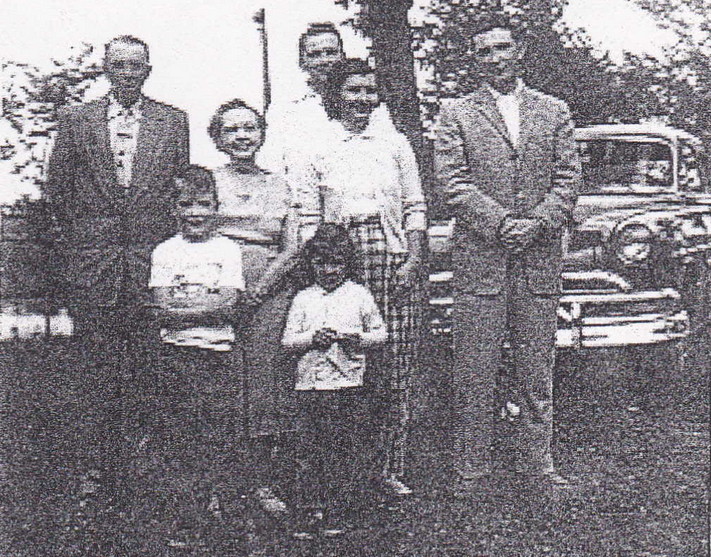
Jean Maupin started the year as teacher, and was replaced mid-year by Charles Griggs.
Jean Margaret Maupin (1915-1987) was born near Clarence, Missouri, and presumably went to the Clarence High School. Little trace is found of her in the usual public records. Whether she was related to Simon Maupin, who once lived across the street from the school, is unknown, but she may have been. She is a descendant of Joel Rice Maupin, who was born in Virginia, and settled near Hannibal in about 1830. It is possible Simon was related to that branch of Maupins. How Jean got into teaching, and how many places she taught is unclear.
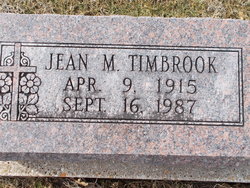
She married James J. Timbrook in Clarence, 20 January, 1951, according to the recorded marriage license. She is buried at the Shelbina Cemetery, Shelbina, Missouri, as Jean M. Timbrook.
The 1940 Census finds her married to Harold L. Davis and living in Clarence, Missouri. He was the proprietor of an electric appliance store. She is credited with one year of college at that time, and is an unpaid family worker, presumably in the store. Social Security records indicate she was known as Jean Maupin Davis in 1941, and reverted to Jean Maupin in 1945.
Miss Maupin replaced Herb Graves at Bohannon School, and was the first teacher hired after the Trachta children began attending. Prior to teaching at Bohannon, she taught at other area rural schools, according to former students of Prairie Dale and Brammer. Her tenure at Bohannon involved a large measure of recreational activity, bingo games, softball games, and visits to neighboring schools.
It was an exciting time for a first grader, including lots of games, car rides to distant rural schools and fellowship with their students. She left after one semester, amid gossip among the older children implying they had detected performance and personal-life deficiencies. Such rumors were heard but not understood by less sophisticated students. Still, even they sensed something amiss.
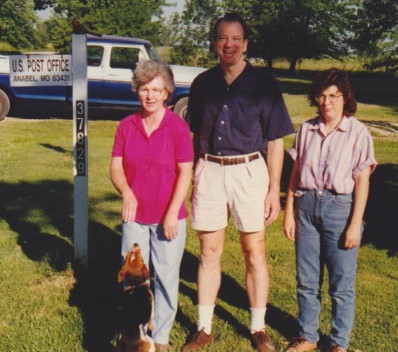
Charles Marion Griggs (1929-1994) was the eldest son of Charles Vaughn and Ida Alzoma Griggs, who ran the general store and post office in Anabel, the small rural town north of the school.
The elder Mr. Griggs was called Charlie, to avoid confusion with his son, and his store was a youngster's wonder. There was a pot-bellied stove at the back, oiled wooden floors, shelves up to the ceilings that required a long-handled grabber to access, and candy jars by the cash register. They sold everything a farmer needed, and sometimes bought eggs and cream from them. Every child who visited got an all-day sucker from Charlie Griggs.
How the Griggs store handled its cash flow is a mystery that deepens as the years pass. Credit was extended to loyal customers, and goods were purchased on account. Payments were made as funds were available. It was a common custom in those days, in that area, at least, but seems unworkable in these less fraternal times.
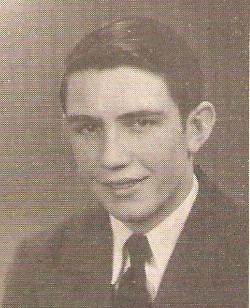
Charles Griggs, the younger, was awaiting induction into the Army, at the time of his hire. After his stint as Bohannon teacher, he jointed the paratroopers and went overseas. He landed in Japan in July, 1951, and by 1952 he was back at Ft. Breckinridge, Kentucky. He then went back to Korea, and later returned home to take over the family business. He was a Macon High School graduate and newspaper accounts indicate he was living in Columbia Missouri in April, 1948, probably attending the University of Missouri. After his return to Anabel, his wife Virginia took over the Post Master duties.
A visit to Anabel in 1996, after fifty years, found the old Griggs store closed, and gone, with nothing left but a vacant lot and a few trees. Charles had passed away the year before. Virginia Griggs, Charles' wife, was still the postmistress, but the post office had moved to a new building on the other side of the square. By the time of a return visit in 2003, the post office had closed.
Charles was an excellent teacher, and his efforts salvaged my first graade experience, filling the gaps in the students' education that had been opened in the first semester of bingo and frivolity.
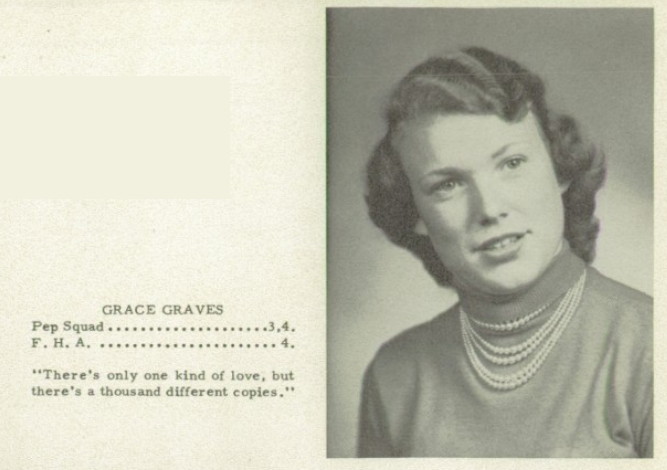
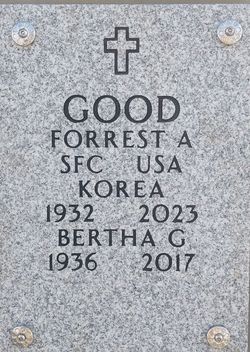
This was the last year for Bertha Grace Graves at Bohannon. After graduating Macon High School in 1954, she married Forest Andrew Good, of Excello, Missouri.
She was a sorely missed, extraordinary force at the little country school. She played the piano by ear, and sometimes played the steam calliope in Macon, County parades. She was a forceful personality known to all, and long remembered in Macon, County after she and Andy Good moved to New Braunfels, Texas. She passed away there in 2017, and she and Andy are buried in Jacksonville, Missouri. If anyone has more remembrances of this bright spark, we'd love to preserve them here.
The Rufener family was also a force at Bohannon School during the 1950s. Lillie Mae Rufener had an older sister, Barbara, and two older brothers, Gene, and Jimmy, at Bohannon School in 1948-49. Over the next years a number of other Rufener boys attended. They lived on a farm about a mile east of the school, and managed to be the first arrivals on most days. They brought a presence, and leadership of a how-to-do-things variety. The school had a massive coal furnace, on the right as one entered, and a coal shed a few yards in front of the door. During the time the Trachta children attended, one of the Rufener boys was normally in charge of banking the fire at night, and keeping it stocked with coal during the day. During this year, that duty fell to Gene Rufener, another eighth grader who made it his business to watch out for the younger children.
Each day began with the Pledge of Allegiance and a sing-along. Bertha Grace played the piano and, since she played only by ear in those days, students were limited to songs she knew. That included most of the numbers in the songbook. She petitioned to play popular songs, but that was seldom allowed, for some reason.

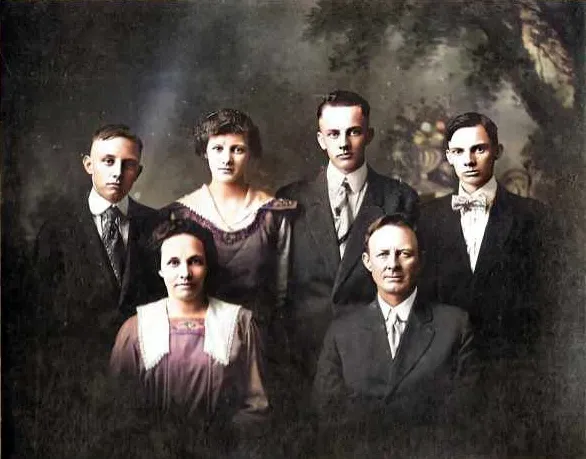
Wray Family
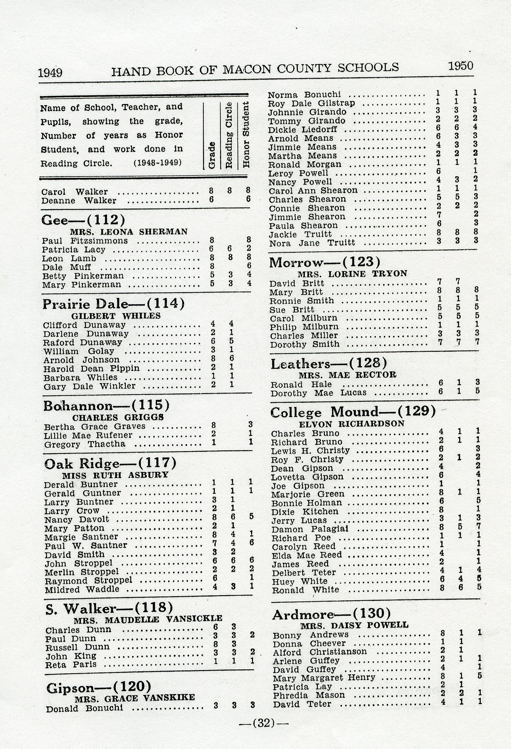
This was the first year for Greg Trachta, the only first grader, who joined his brother at the school. It was also the year the Wray children showed up, newly arrived from Iowa, as well as the Griffith children, also from Iowa. The Griffiths moved to the old Tom Bohannon place (see 1918 plat map). The chaos of the first semester caused the reading circle to be abandoned for this year.
My first year at Bohannon School was the most fun I ever had in school. The first semester was a lark. It must have involved more than this, but what I remember was a continuous run of bingo games, softball games, and bouncing here and there over the rutted dirt roads, to other rurual schools in Miss Maupin's ancient, even for those days, car. Add to that the extended recesses, gossip about Miss Maupin's boyfriend, who showed up from time to time in the most amazing looking new Mercury, and the unending gossip among the older girls about her social life, and the short few months brought social stimulation never to be exceeded. My mother took charge of my education that year, with writing and arithmetic exercises after the cows were milked.
After Charles Griggs took over, academics resurged, but it was truly a relief. The exhausting pace of that first semester couldn't have been sustained. Charles was an excellent teacher, especially for beginners like me. His patience, explanations and scheduling set the patterns and habits of my formal education.
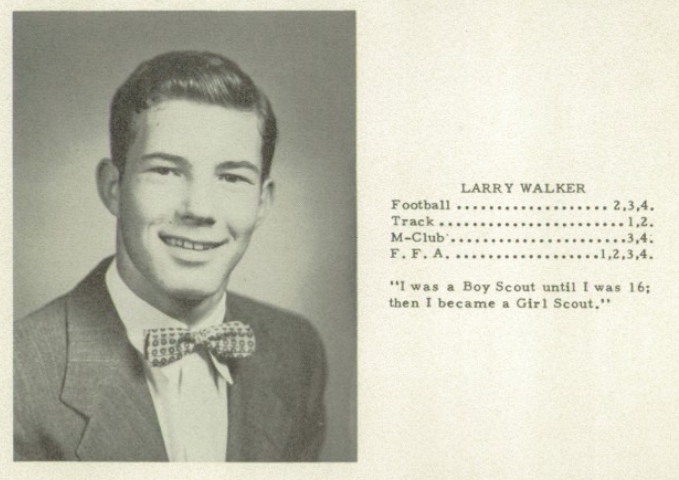
January, 1949 was the year of the great Midwestern blizzard which left the entire outdoors thick with ice. The area was glazed over for weeks. Getting from house to barn was an expedition. A few kids, I believe Larry Walker and someone else, ice skated to school. I seldom tell this story anymore, because when I do I see peoples' eyes glaze over with disbeief. But the memory is still sharp and vivid of seeing kids skating past our front door on that frozen, ice-glazed dirt road.
The Rufeners had their own ice-walking technique. The mowing machine was a common farm implement used to cut hay. Many farms had a few broken parts, and among the components were small, metal triangles from the sickle arm. The Rufeners, perhaps on the initiative of their relative, Dick Marsh, got them red hot, bent the corners into three-point cleats, and fastened them to their shoes. I remember Gene, and Jimmy Rufener heating sickle blades in the firebox of the school furnace, and outfitting several friends. They were more effective than ice skates.
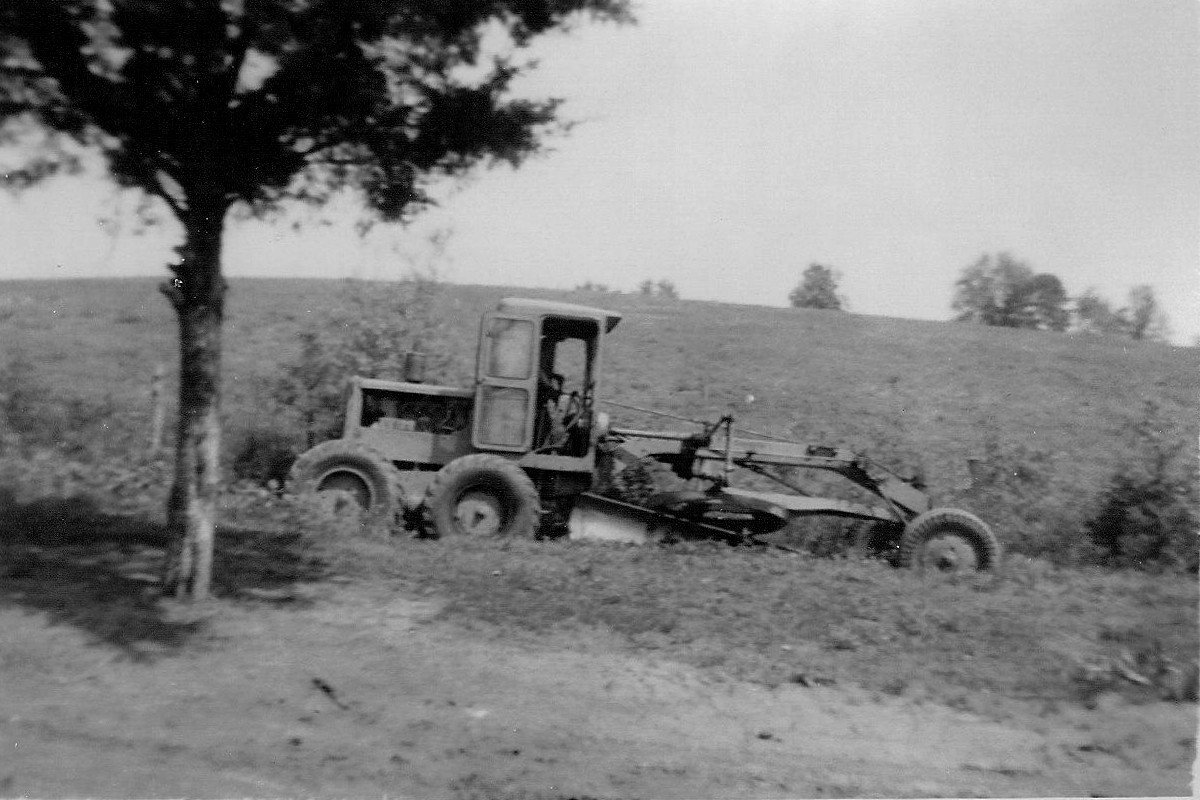
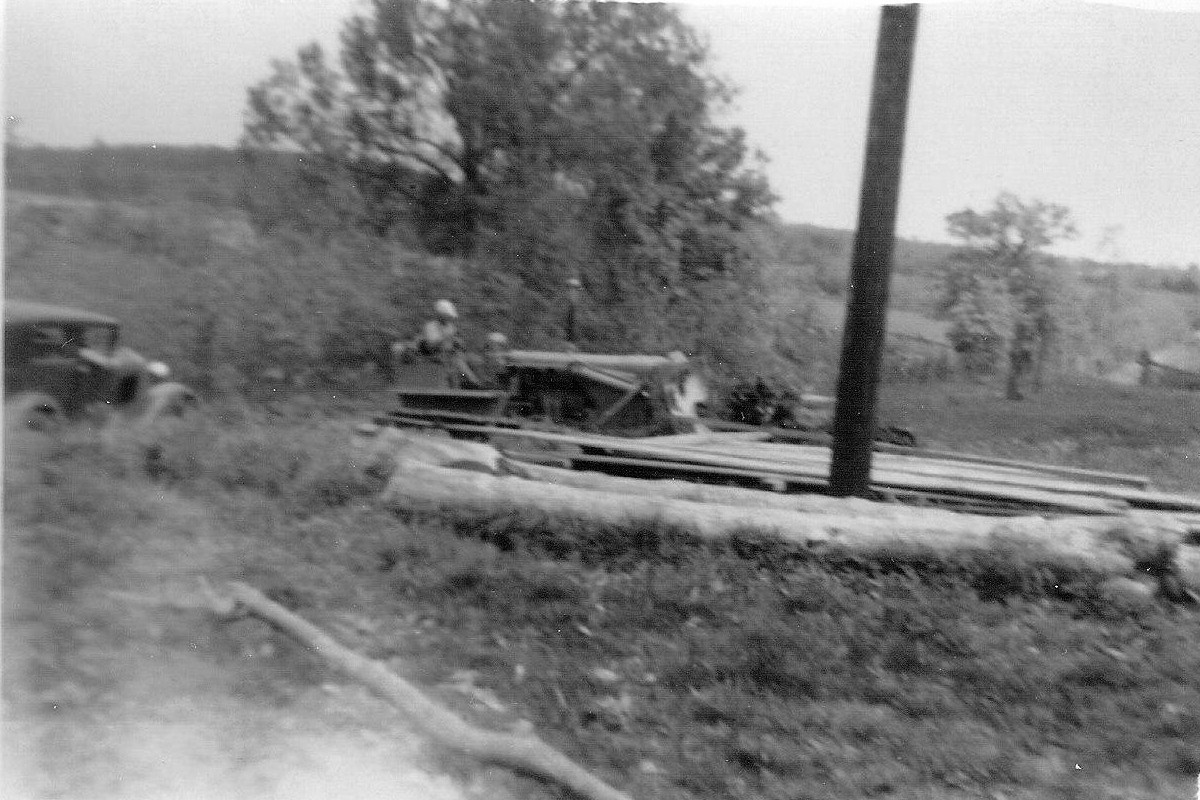
One sterling memory of the Bohannon School environs was Allen Cox, and the mail delivery. The roads prior to the late 1950s were deplorable. Two-lanes paved was the scarce gold standard; a few others were graveled. The remainder, like the Bohannon School road, were narrow, dirt lanes, heavily rutted by the last wet-weather usage. They were best in the frozen winter, worst in spring. Tractors and horses could usually get through, but cars often couldn't.
Allen Cox was the locally famous mail carrier for many years. He'd invented a homemade vehicle that could navigate dirt roads in almost any condition. It had huge tractor tires on the rear, was mounted high to avoid scraping while mucking through deep, wet ruts, and, with chains for traction, could manuever the ice and snow. A local measure of a storm was whether Allen Cox could deliver the mail. He usually could. In looking for a picture of his "Anabel Puddle Jumper," we came across this description from Elisabeth Graves, as told by Herschel Graves, from the website "Ancestry.com."
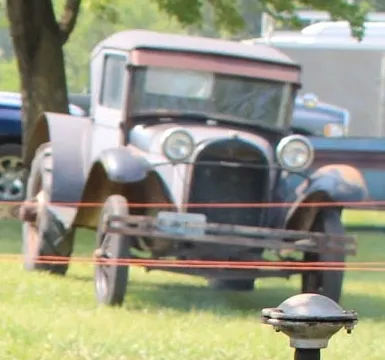
"Back before the county roads were paved (1950s), Allen Cox was the postal delivery person for the Anabel, MO area. He rigged up an old Model A vehicle that was called the "Anabel Puddle Jumper" -- a combination of a car and a tractor to traverse the mud & gravel roads. This vehicle was displayed at the Macon County Fairgrounds for the Fly Reunion in August 2011."
A further search turned up this nearby image plucked from the background of a picture taken from the Facebook page for the 2017, Old Time Flywheel Reunion of the Macon County Flywheel & Collectibles Club. The identity is unconfirmed as yet. I'll have to contact the club directly. But for now, I'm one of the very few people who saw it in action, and I say this is Allen Cox's mail delivery vehicle. Last time I remember seeing it was in front of our house in Missouri, tire deep in mud.
Previous Page

Next Page

Back to the Attic of Gallimaufry
Who in the world cares about Bohannon School?
Share your comments
Share your pictures, memories and stories